In a business, much of the time is spent not on making a decision itself, but on preparing the material: finding the right files, checking the data, transferring it to a spreadsheet and adapting the result to a company template. It is precisely these linked tasks where a new generation of AI may offer practical value. The result still needs to stand up to human review.
OpenAI introduced GPT-6 Astra on 3 September 2026. According to the developer, it improves computer use, software development and the production of professional work. For a manager, the key opportunity is to delegate a complete task with a specific outcome. The official OpenAI announcement also includes demonstrations.
The business scenarios and proposed pilot below are our practical interpretation. They are not measurements of Yenwa's results or a promise of savings for every business. We verified the product information as of 6 September 2026.
What changes when AI also works in applications
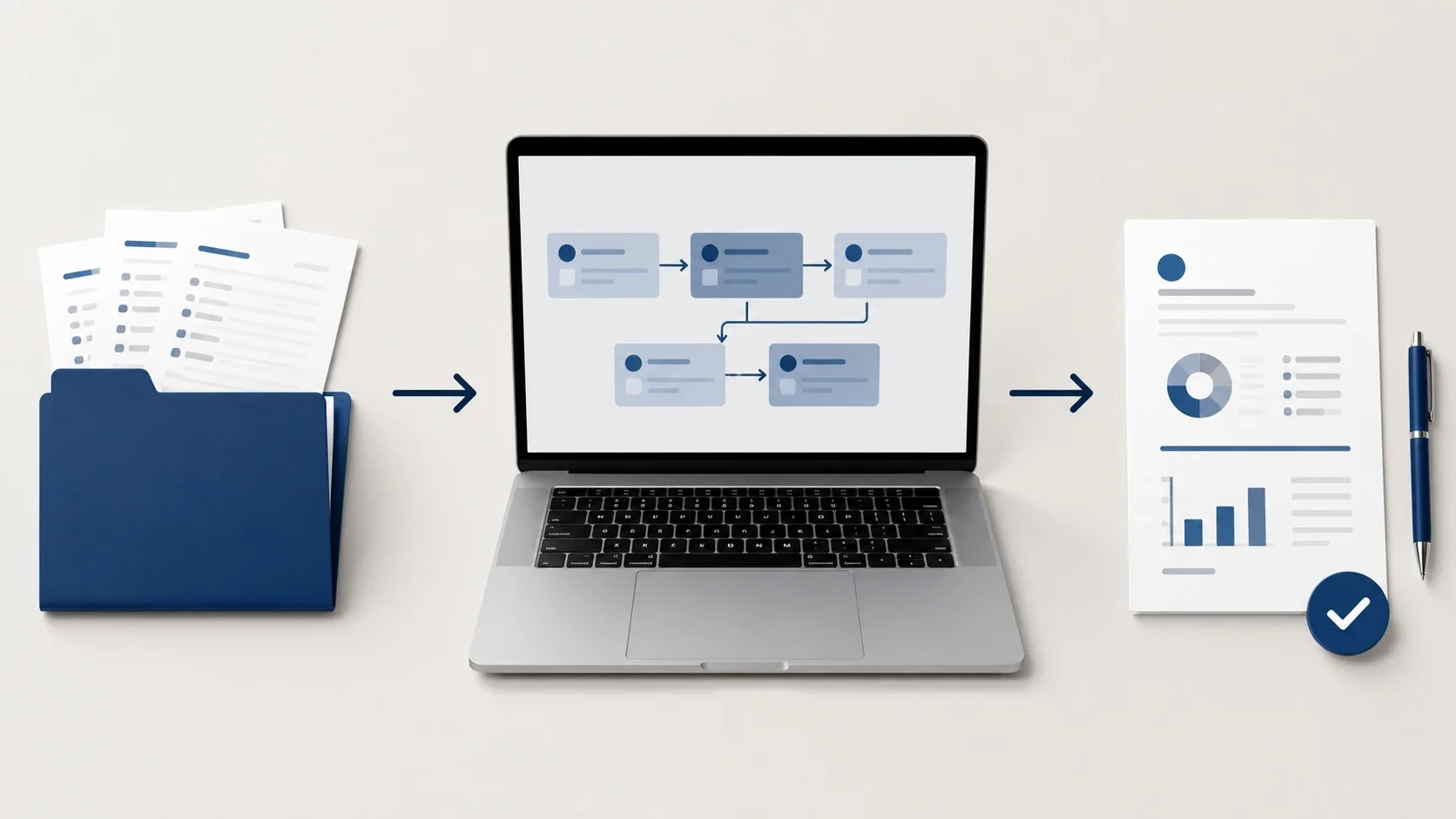
In a typical chat interaction, an employee asks a question and transfers the answer to another system themselves. An AI agent is a workflow in which the model also receives tools to carry out parts of the task. This can create a sequence from an input document through processing to a proposed result. The scope of the work depends on the environment provided and the access granted.
Astra's documentation describes asynchronous tool calls and the ability to add instructions while a task is underway. In practice, this makes it possible to continue independent work while waiting for a tool and incorporate a correction during the process. The specific capabilities depend on the integration. The model guide provides details.
For a smaller business, an example would be preparing a weekly sales report. The brief specifies the source of order data, the reporting period, the calculation method and the report template. The expected output is a file with traceable data and any uncertainties flagged. The employee then reviews a concrete result instead of assembling material from several places.
Official OpenAI video
The video Introducing GPT-6 Astra for developers, published on 4 September 2026, provides further insight into how the model works with tools. It helps distinguish the capabilities of a demonstration environment from the integration a business needs to build for itself. Watch the official video on YouTube.
Where an initial deployment has a manageable scope
At Yenwa, we would start with a recurring process that has traceable inputs and a result someone can check. Choosing solely on the basis of what looks impressive in a demonstration will not reveal the cost of corrections or dependence on a particular employee.
| Area | Pilot task | What to check |
|---|---|---|
| Sales reporting | Prepare a report from authorised order exports. | Totals, reporting period, missing records and the source of each claim. |
| Business documents | Adapt a draft report to an approved template. | Preservation of meaning, required sections and data accuracy. |
| Internal application | Prepare a proposed change and verify it in a test environment. | Functionality, permissions and the impact on existing processes. |
The table proposes types of work to choose from; it is not a list of ready-made connectors. Before a pilot, it is necessary to check whether the specific system can be connected and under what conditions. If the system provides a stable API — a programming interface for exchanging data — we would consider a direct integration for recurring steps. Operating the user interface makes sense where it fits the task and its reliability can be verified.
That is why, when developing custom applications and automations, we do not begin by selecting a model. First, we need to understand the input, the required output, the person responsible and the point at which an error occurs. Only then can we determine which part AI should handle and which should follow a fixed application rule.
Check availability in the specific account
The launch announcement describes a phased rollout. In Enterprise, access at launch is enabled by an administrator. The release notes also describe a limited initial group of organisations.
OpenAI's current help article distinguishes availability in Chat, Work and Codex. Do not treat the name of a subscription alone as confirmation of a particular capability. Before commissioning an integration, verify the account, workspace and intended use.
In practice, prepare a small trial task in the environment your team will use. A successful demonstration in a personal account does not yet verify company access, colleagues' permissions or the availability of the necessary tools.
Compare the cost with a completed and reviewed task
The model card lists standard API processing at USD 10 per million input tokens and USD 50 per million output tokens. A token is a unit of processed text, not an exact number of words. Caching, long context and tools have additional billing rules; the model card and pricing set out the terms.
For a business decision, however, you need the total cost of a usable result. In a pilot, we would include input preparation, review, corrections, repeated attempts, operation of the integration and use of the model itself. Producing a report quickly may not save time if the figures then take a long time to correct.
Compare results using the same sample of tasks. Track how many outputs the reviewer accepted, how many required changes and why. Separate success with routine inputs from behaviour when a file is missing, a date is ambiguous or an export format changes. This distinction helps reveal whether the solution can also handle normal operational variations.
Access and business data are part of the design
OpenAI applies additional monitoring of model behaviour for Astra. The monitoring documentation notes that these checks may also stop a legitimate task. This is an operational condition the integration should account for; the OpenAI safety overview explains the broader context.
For a pilot, we recommend a separate environment and access only to the necessary material. When drafting a sales proposal, the agent can prepare a file while sending it to the customer remains an explicit approval step. The record should show what the result was based on and who accepted it. These rules also make it easier to investigate a complaint or repeat the work.
According to the API data policies, data is not used for training by default unless the customer explicitly opts in. This does not mean zero retention: retention depends on the feature and configuration. Before connecting company files, we therefore check data processing and retention in connected services as well.
These questions are part of designing cybersecurity for a business. To approve a pilot, we need to know who may start a task, which data they can access and what result they can save. Expansion to another team should build on the findings from the pilot.
What the integration developer needs to know
Tool calling with Astra requires the Responses API. The release notes also list custom temperature and top_p values as unsupported. An existing application therefore needs to be reviewed and tested against OpenAI's migration notes before changing the model.
The task specification should make clear what happens if a tool fails, a task is interrupted or further information is needed. When writing to a business system, we also recommend checking repeated execution: the same request should not create a duplicate order or record. This is a property of the application's design and must be tested against its specific behaviour.
The first step: one process with a clear result
Choose one recurring process and prepare representative material, including difficult cases. Agree on the criteria the reviewer will use to accept an output as correct, and record the current processing time. During the pilot, compare the entire workflow, including review and corrections. The decision to expand the solution will then rest on your own results.
If your business repeatedly transfers data between systems or manually prepares the same reports, Yenwa can map the process, check the available interfaces and propose a pilot with a defined scope. The outcome should be a decision about where AI produces a usable result, what access it needs and what still needs to be resolved before routine operation.
Sources and further information
- GPT-6 Astra: A new generation of intelligence — OpenAI
- Release notes – Introducing GPT-6 Astra — OpenAI
- Model guidance – GPT-6 Astra — OpenAI
- GPT-6 Astra model — OpenAI
- GPT-5.6 and GPT-6 Pro in ChatGPT — OpenAI
- Safety overview: GPT-6 Astra — OpenAI
- Misalignment monitoring — OpenAI
- Data controls in the OpenAI platform — OpenAI
- Introducing GPT-6 Astra for developers — OpenAI