Cybersecurity

Cybersecurity for companies: audit, account protection, firewall and monitoring

We help companies reduce the risk of ransomware, phishing, data leaks and outages. We check accounts, MFA, firewall, VPN, e-mail security, endpoint protection, backups and incident readiness. The result is a clear list of risks, priorities and practical measures.

  • risk, access and vulnerability audit
  • firewall, endpoint protection and e-mail security
  • MFA, backups and recovery checks
  • incident readiness and security rules

Quick answer

What is cybersecurity for companies?

Cybersecurity for companies is a combination of technical measures, rules, monitoring, backups and incident readiness. It is not only about antivirus or a firewall. It is important to know who has access to systems, whether accounts are protected by MFA, whether backups can be restored, which services are exposed to the internet and how the company will respond to suspicious behaviour, phishing or a ransomware attack. In practice, we therefore check user and administrator accounts, e-mail, VPN, firewall rules, endpoints, Microsoft 365, data sharing, backups and basic incident procedures. The result should be a clearer overview of weak points, an order of priorities and measures the company can realistically implement without unnecessary chaos.
Audit risks, accounts, devices and processes
MFA protection of critical accounts
Backup backups and post-incident recovery
Plan priorities and security measures

When to address it

Security is best addressed before an incident, not only after it.

We help companies reduce the risk of ransomware, phishing, data leaks and outages. We connect technical configuration, rules, backups, monitoring and practical recommendations that make sense for the size of the company.

  • administrator accounts do not have MFA or clear rules
  • firewall and exposed services have not been checked for a long time
  • users receive phishing or suspicious attachments
  • backups exist, but recovery has not been verified
  • the company does not know what to do during a security incident
  • regular checks of devices, access and risks are missing
  • employees use repeated or weak passwords
  • it is unclear who has administrator permissions
  • accounts or access remained active after an employee left

What we provide

Security measures from audit to protection of accounts, network and data

Most often we solve: Security audit Firewall and network protection Endpoint protection E-mail and phishing Identity and MFA Backups and recovery Incident response NIS2/GDPR readiness
Security audit Review of accounts, devices, network, cloud, backups, access and operational risks.
  • accounts and roles
  • network and firewall
  • backups and recovery
Firewall and network protection Firewall rules, VPN, segmentation and review of services exposed to the internet.
  • firewall policies
  • VPN
  • segmentation
Endpoint protection Protection of computers, servers and notebooks against malware, ransomware and suspicious activity.
  • antivirus
  • EDR/XDR
  • updates
E-mail and phishing Antispam, domain protection and rules that reduce the risk of fraudulent messages.
  • SPF/DKIM/DMARC
  • antiphishing
  • user training
Identity and MFA Multi-factor authentication, rights management, administrator accounts and access to sensitive systems.
  • MFA
  • roles and groups
  • admin accounts
Backups and recovery Review of backups and real data recovery after an outage, failure or security incident.
  • backup plan
  • recovery test
  • DR procedure
Risk monitoring Monitoring availability, suspicious events, capacity and changes that may affect security.
  • alerts
  • logs
  • reporting
Policies and recommendations Clear rules for access, devices, passwords, backups and incident response.
  • priorities
  • procedures
  • documentation

Not sure where to start?

Send us a short description of the situation and we will recommend whether an initial analysis, a one-off intervention or longer-term cooperation makes sense.

I want a recommended next step

Cooperation models

What cybersecurity cooperation can look like

Not every company needs the same level of oversight. We set cooperation according to risk, infrastructure scope and internal capacity.

One-off security audit

Suitable for companies that want to know their weak points, critical accounts, exposed services and measure priorities.

Monthly security oversight

Suitable for companies that want regular checks, monitoring, security rule management and ongoing recommendations.

Incident assistance

Suitable for suspicious behaviour, an attack, an outage or the need to quickly stabilise the environment and restore operations.

Operations and context

The most common security risks that stop company work

Ransomware and phishing

Protection against attacks that most often stop company work

The biggest risks often start in e-mail, a weak password or poorly configured access. That is why we address a combination of technical measures, backups and user rules.

  • e-mail and domain protection
  • MFA for critical accounts
  • backups outside the primary environment
  • limiting administrator rights
  • procedure for a suspicious incident

Network and cloud security

Security rules must cover the network, accounts and cloud services

Company data is no longer kept on a single server. We check the network, Microsoft 365, remote access, devices, backups and administrator accounts as one whole.

  • firewall and VPN rules
  • MFA and conditional access
  • document sharing review
  • network segmentation
  • monitoring suspicious traffic
  • backup recovery test

Solution design

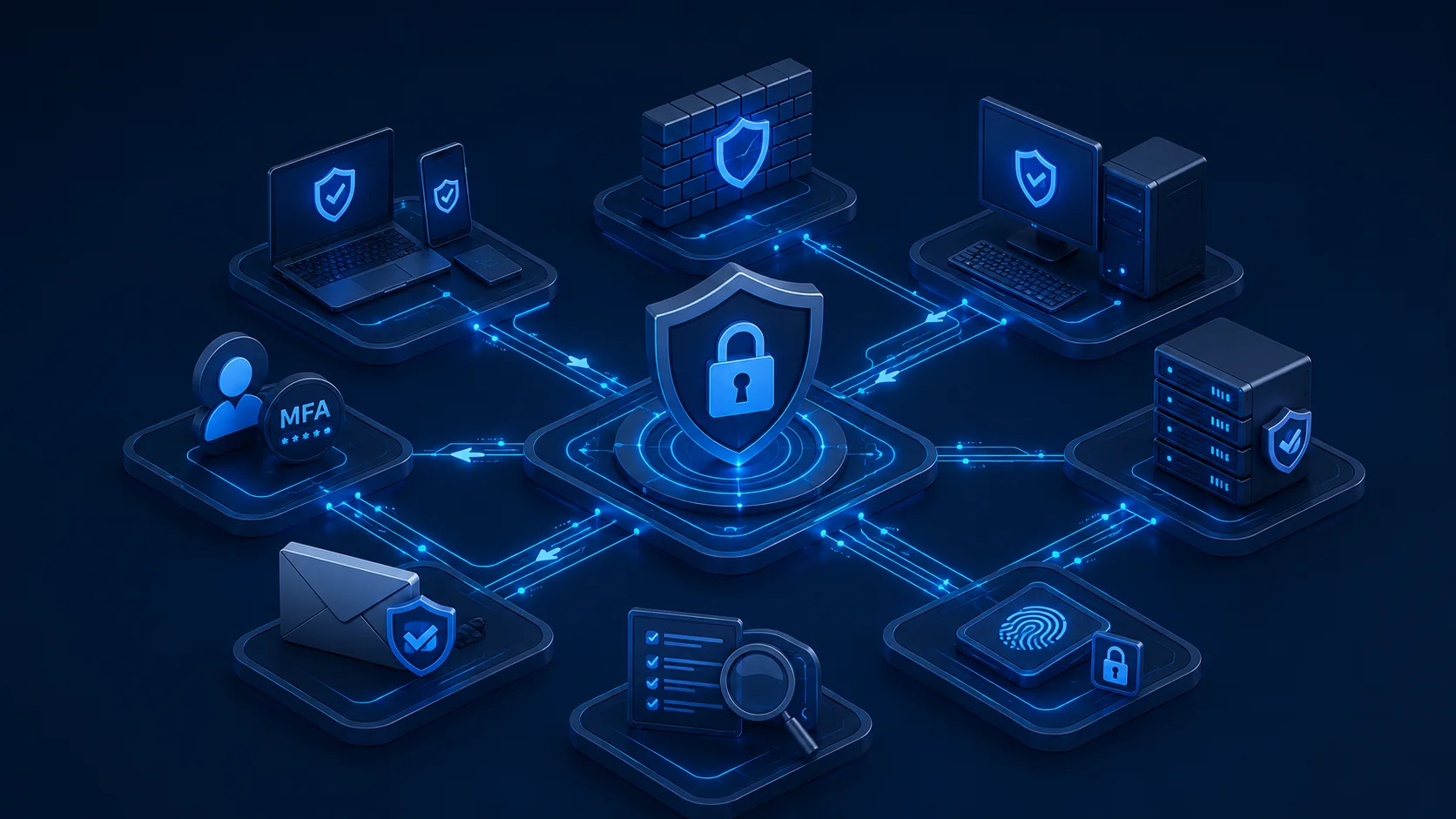
Security architecture: accounts, network, e-mail, devices and backups

The important parts of the solution should be designed so it is clear what is solved first, what follows from it and where the company should gain better visibility.

Security audit Firewall and network protection Endpoint protection E-mail and phishing Identity and MFA Backups and recovery Incident response
  • list of critical risks
  • account and MFA review
  • overview of open services and firewall rules
Cybersecurity with account protection, firewall, devices, servers, e-mail and risk monitoring

Audit output

What you receive after the initial security audit

The audit should show which risks are critical, what can be fixed quickly and which measures have the greatest impact on company protection.

  • list of critical risks
  • account and MFA review
  • overview of open services and firewall rules
  • recommendations for backups and recovery
  • priorities by impact and effort
  • security rule proposal
  • recommendation for the next oversight model

First 30 days

What the company should see after the first 30 days

After the first 30 days, the company should have clearer priorities, the most critical weak points fixed and a plan for further security development.

  • enabled or recommended MFA for critical accounts
  • overview of administrator accounts
  • first firewall/VPN rule adjustments
  • endpoint protection recommendations
  • verification or plan for backup recovery testing
  • basic incident procedure
  • list of further priorities by risk

Comparison

Without security oversight vs. security under control

Without security oversight

  • weak or reused passwords
  • unclear administrator accounts
  • open services without checks
  • untested backups
  • response only after an incident

Security under control

  • MFA for critical accounts
  • overview of access and roles
  • adjusted firewall/VPN rules
  • recovery plan and incident procedure
  • ongoing risk monitoring

Responsible approach

What we avoid in cybersecurity

We do not start by buying a tool without understanding the risks

We do not recommend expensive solutions without clear benefit

We do not consider a company secure just because it has antivirus

We do not leave administrator accounts unchecked

We do not address only the consequence of an incident, but also its cause

Who the service is for

Security for companies that do not want to risk data, e-mail and operations

The service is suitable for organisations where an outage or data leak means real business, reputational or operational damage.

companies with Microsoft 365 clinics and specialist workplaces schools and organisations manufacturing and warehouse operations accounting and law offices companies with branches companies without an internal security team

Fewer risks,
faster response,
safer data

Good security reduces the likelihood of an incident and shortens recovery time if a problem still appears.

Fewer weak points in accounts, network and cloud
More control over access and administration
Faster decision-making thanks to priorities and procedures
Verified backups and recovery during an incident

How we work together

From audit to security oversight

  1. Risk mapping

    We check accounts, devices, network, cloud, backups, access and the biggest weak points.

  2. Priority plan

    We divide recommendations into critical, important and development steps according to their impact on the company.

  3. Implementation of measures

    We configure MFA, firewall rules, e-mail protection, backups and other practical measures.

  4. Review and improvement

    We continuously monitor risks, support users and update security settings.

Technology and trust

We handle security technically, procedurally and practically for users

Buying a tool is not enough. Correct configuration, documentation, review and the ability to restore operations are essential.

View references
  • security consultations and technical measures for companies across Slovakia
  • experience with Microsoft 365, firewalls, VPN, endpoint protection and backups
  • focus on practical priorities according to risk and operational impact
  • support with incidents, access checks and data recovery

IT support across Slovakia

We handle cybersecurity remotely and on site when needed

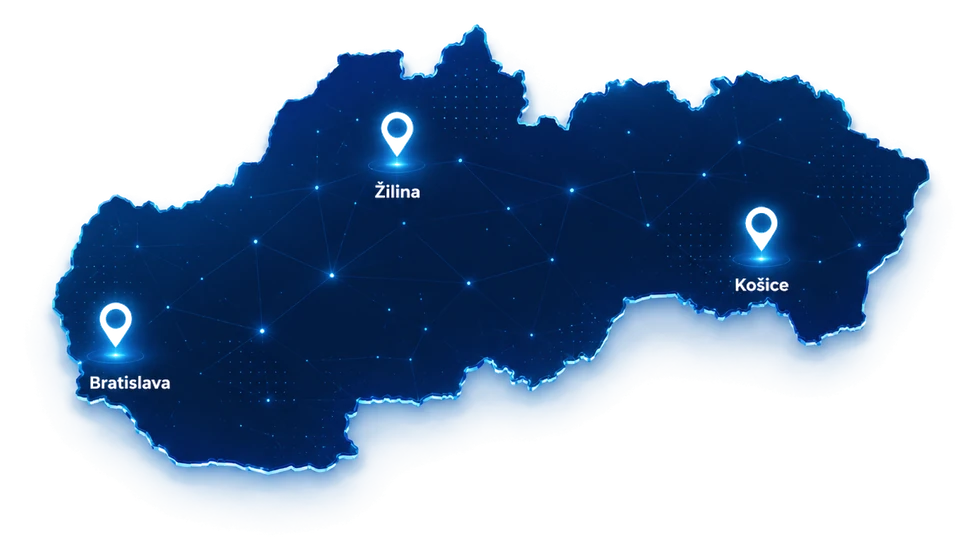
Map of Slovakia with support points highlighted in Bratislava, Žilina and Košice

Most security consultations, configuration checks, account reviews, cloud rules, monitoring and recommendations can be handled remotely. For infrastructure work, service, on-site review or incident handling, we agree on a technician visit according to location, scope and priority.

Related IT services

What we most often connect cybersecurity with

We often connect this service with cloud services .

We often connect this service with network administration .

We often connect this service with camera systems .

We often connect this service with IT outsourcing .

See also references or send us a short description of the situation via contact .

Frequently asked questions

What companies ask before a security audit

Here you will find answers to questions companies most often ask before choosing a service or starting cooperation.

View all FAQ

A review of the network, devices, access, backups, policies and risks with recommendations for improvement.

We handle critical incidents with priority according to the agreed support scope and SLA. For an urgent issue, we recommend calling so we can assess the situation faster.

We use proven solutions from Fortinet, ESET, Sophos, Microsoft and Veeam.

We can prepare technical and process measures that support compliance with the requirements.

Yes. An audit makes the most sense before an incident because it can reveal weak accounts, open services, missing MFA, risky backups or unclear administrator access before they cause damage.

MFA is multi-factor authentication during sign-in. It helps protect accounts even when a password is leaked and is one of the basic measures for administrator accounts, Microsoft 365, VPN and other critical systems.

Incident response is a prepared procedure for responding to a security issue. It includes assessing the situation, isolating the risk, restoring operations, checking the cause and recommending how to prevent a similar incident.

Yes. We can check administrators, MFA, groups, permissions, sharing, e-mail security and other Microsoft 365 settings that affect company security.

Not as a standalone measure. Antivirus or endpoint protection is an important layer, but a company also needs to address accounts, MFA, firewall, backups, e-mail security, monitoring, access rights and incident readiness.

Do you want to know where your company is most vulnerable?

Let us start with a security consultation. We will review accounts, network, e-mail, backups and the first measures that make the most sense.